
What Montgomery v. Caribe Transport Means for Texas Truck Accident Cases
When an 18-wheeler causes a serious crash, the truck driver and trucking company are usually the most obvious parties to investigate.
But modern freight transportation often involves another company behind the scenes: a freight broker. Brokers connect companies that need freight moved with motor carriers willing to haul it. They may not own the truck, employ the driver, or physically transport anything themselves.
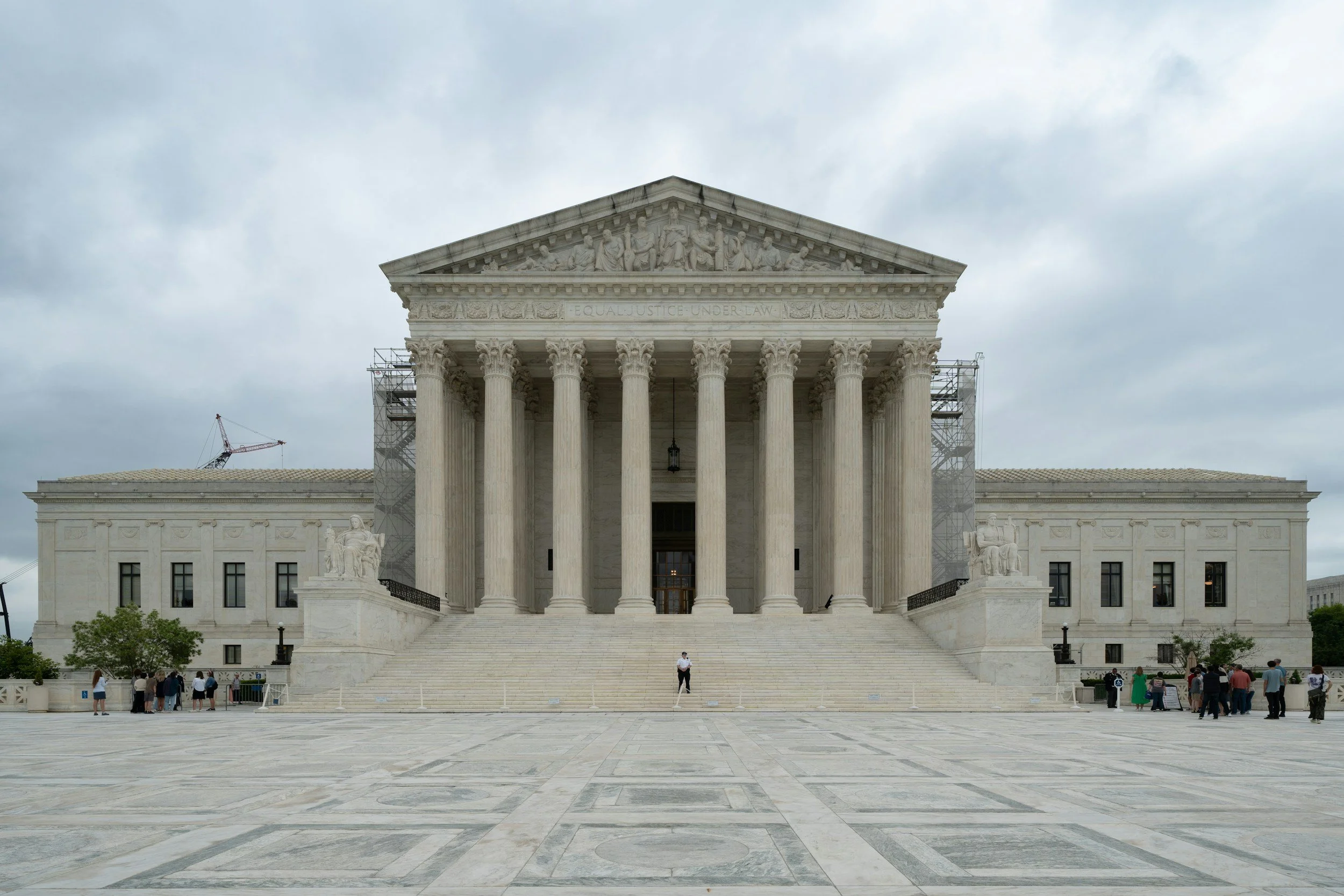
In May 2026, the United States Supreme Court issued an important decision addressing whether federal law protects freight brokers from state-law claims alleging that they negligently selected an unsafe trucking company.
In Montgomery v. Caribe Transport II, LLC, the Supreme Court unanimously held that federal transportation law does not categorically preempt this type of negligent-selection claim.
For people injured in commercial-truck crashes, the decision may make the broker's role in selecting the motor carrier an important part of the investigation.
What Happened in Montgomery?
Shawn Montgomery was a commercial truck driver whose tractor-trailer was stopped along the road when it was struck by another truck driven by Yosniel Varela-Mojena.
Varela-Mojena was driving for Caribe Transport II, LLC. C.H. Robinson Worldwide, Inc., a freight broker, had arranged for Caribe Transport to haul the shipment.
Montgomery suffered catastrophic injuries, including the amputation of his leg. He sued the driver, motor carrier, C.H. Robinson, and related entities.
His claim against C.H. Robinson was based on negligent hiring or selection.
Montgomery alleged that Caribe Transport had a conditional federal safety rating and deficiencies concerning matters such as driver qualification, hours of service, maintenance, and crash history. He argued that C.H. Robinson knew or should have known that selecting Caribe Transport presented an unreasonable safety risk.
The question eventually reached the U.S. Supreme Court.
Why Was Federal Preemption an Issue?
Congress enacted the Federal Aviation Administration Authorization Act, commonly called the FAAAA.
Among other things, the FAAAA prevents states from imposing certain laws or regulations relating to the prices, routes, or services of motor carriers and freight brokers.
Freight brokers had successfully argued in some federal courts that a negligent-selection lawsuit directly regulates a broker's core service—choosing a motor carrier—and was therefore preempted by federal law.
But the FAAAA also contains an important exception.
Congress provided that the preemption provision does not restrict a state's safety-regulatory authority “with respect to motor vehicles.”
The Supreme Court had to decide whether a state-law claim alleging that a broker negligently selected an unsafe carrier falls within that safety exception.
The Supreme Court Said It Does
The Supreme Court concluded that negligent-selection claims of the type asserted by Montgomery fall within the FAAAA's motor-vehicle-safety exception.
The Court reasoned that state common-law duties are one way states regulate safety. A claim alleging that a broker failed to use reasonable care when selecting a company to transport freight by truck directly concerns the motor vehicles that will perform that transportation.
As a result, the FAAAA does not eliminate the claim merely because the defendant is a freight broker.
The Court reversed the Seventh Circuit and sent the case back for further proceedings.
Does This Mean a Freight Broker Is Liable Whenever Its Carrier Causes a Crash?
No.
This is an important limitation of the decision.
Montgomery primarily answered a federal preemption question. It did not hold that every broker owes damages whenever a carrier it selected causes an accident.
A claimant still has to establish the requirements of the applicable state's tort law.
That can include questions such as:
Did the broker owe a legal duty under the circumstances?
What information about the carrier was reasonably available?
Did the broker act reasonably when selecting the carrier?
Was the carrier actually incompetent or unsafe in a relevant way?
Did the alleged failure in the selection process contribute to the crash?
Did the carrier or driver commit negligence that caused the injury?
Justice Kavanaugh emphasized this point in a concurrence joined by Justice Alito. He explained that the decision should not be understood to mean that freight brokers will routinely be liable after truck crashes and noted that brokers that act reasonably in selecting reputable carriers can defend themselves under ordinary state tort principles.
So Montgomery removes a potentially powerful federal-law defense. It does not eliminate the injured person's burden of proving negligence.
What Does Montgomery Mean in Texas?
This is where the issue becomes particularly interesting.
Only a few months after the Supreme Court decided Montgomery, the United States Court of Appeals for the Fifth Circuit—which includes Texas—had an opportunity to apply it directly.
The Fifth Circuit Has Already Applied Montgomery to a Texas Truck Case
In Crane v. Penske Transportation Management, LLC, decided August 4, 2026, a tractor-trailer jackknifed and crossed into oncoming traffic near Laredo, killing another driver.
The transportation arrangement involved several layers. A shipper hired Penske Logistics; Penske outsourced the shipment through its affiliated broker, Penske Transportation Management; another carrier was selected; and the load was eventually passed to yet another carrier whose driver was involved in the fatal collision.
The plaintiffs asserted, among other things, that Penske Transportation Management had negligently selected a motor carrier.
The federal district court in Texas granted summary judgment to the broker because it believed the negligent-hiring claim was preempted by the FAAAA.
While the case was on appeal, the Supreme Court decided Montgomery.
The Fifth Circuit therefore reversed the preemption ruling, explaining that Montgomery had established that the FAAAA's safety exception applies to negligent-hiring claims against freight brokers.
That is significant for Texas truck cases.
A broker defending a Texas case generally can no longer obtain dismissal of this type of motor-vehicle negligent-selection claim simply by arguing that the FAAAA preempts state tort law.
But Texas Law Still Matters
The Fifth Circuit stopped short of deciding another important question in Crane.
The broker argued that, even if federal law did not preempt the claim, Texas law did not impose a duty on the broker in the first place.
The Fifth Circuit declined to decide that issue because the district court had not previously addressed it. Instead, the case was remanded for further proceedings.
That leaves an important distinction:
Federal law now permits the state-law claim to proceed past a FAAAA preemption defense.
But:
The plaintiff must still establish that Texas law recognizes a duty and liability under the particular facts of the case.
That issue remains developing.
A Recent Texas Supreme Court Decision Adds Another Layer
The Texas Supreme Court addressed a related—but importantly different—issue in In re Home Depot U.S.A., Inc. in May 2026.
Home Depot had hired Werner Enterprises, a federally regulated motor carrier, to transport freight. A Werner truck allegedly ran a red light and killed a motorcyclist.
The plaintiffs alleged that Home Depot negligently selected Werner.
The Texas Supreme Court held that, under the facts pleaded, Home Depot was simply a passive shipper of ordinary goods and did not owe the injured motorist a duty to investigate the competence of the federally regulated carrier. The Court emphasized that Home Depot did not control Werner, did not create or increase the roadway risk, and did not provide Werner with its authority to operate on public highways.
The Court also made an important observation about Texas negligent-hiring law: the Texas Supreme Court has not definitively resolved the existence, elements, or scope of negligent-hiring and negligent-retention claims involving employees or independent contractors.
That means the Texas landscape after Montgomery requires careful attention to what role each company actually played.
A shipper that merely hires an established carrier may present a very different legal question from a freight broker whose business is specifically selecting carriers to transport other companies' goods.
Why the Broker's Role May Matter After a Serious Truck Crash
After Montgomery, lawyers investigating significant commercial-truck collisions have another reason to determine exactly how the load was arranged.
It may be important to identify:
Who hired the motor carrier
Whether a freight broker was involved
What carrier-selection procedures the broker used
What information was available about the carrier when it was selected
The carrier's federal operating authority
Available FMCSA safety information
Prior safety ratings or identified deficiencies
The broker's internal vetting policies
Communications concerning selection of the carrier
Contracts among the shipper, broker, and carriers
Whether the transportation was later subcontracted or re-brokered
Those facts do not automatically establish liability.
But they can help answer a much more important question:
Was this simply an unpredictable accident involving an otherwise reasonably selected carrier—or was there information suggesting that the company entrusted with the load presented an unreasonable safety risk?
Truck Accident Responsibility May Extend Beyond the Driver
One of the most important lessons from Montgomery is that determining responsibility after a commercial-truck crash may require looking beyond the company name printed on the tractor or trailer.
A trucking operation may involve a driver, motor carrier, freight broker, shipper, equipment owner, maintenance provider, cargo loader, and additional companies further up the transportation chain.
Not every company will be legally responsible simply because it participated in the shipment.
But when a serious accident occurs, the role of each participant should be identified before deciding where responsibility begins and ends.
The Supreme Court's decision in Montgomery makes clear that federal transportation law does not categorically shield a freight broker from a state-law claim alleging that it negligently selected an unsafe motor carrier. Whether a particular broker is ultimately responsible will depend on the facts and the applicable law.
Injured in a Commercial Truck Accident?
Lyman Law investigates serious 18-wheeler and commercial-vehicle crashes in Houston and the surrounding area.
A truck case may involve more than the driver who caused the collision. We examine the companies involved in arranging and performing the transportation, the available safety evidence, and the relationships among the parties to determine who may bear responsibility.
Free Consultation
We only get paid if you get paid, so you can rest assured that we will fight as hard as we can to make sure you’re treated fairly.